

Escapement Lantern
A brass-and-glass lantern designed around warm LED filaments, a removable light cartridge, and a USB-C-powered charging dock.
Origin.
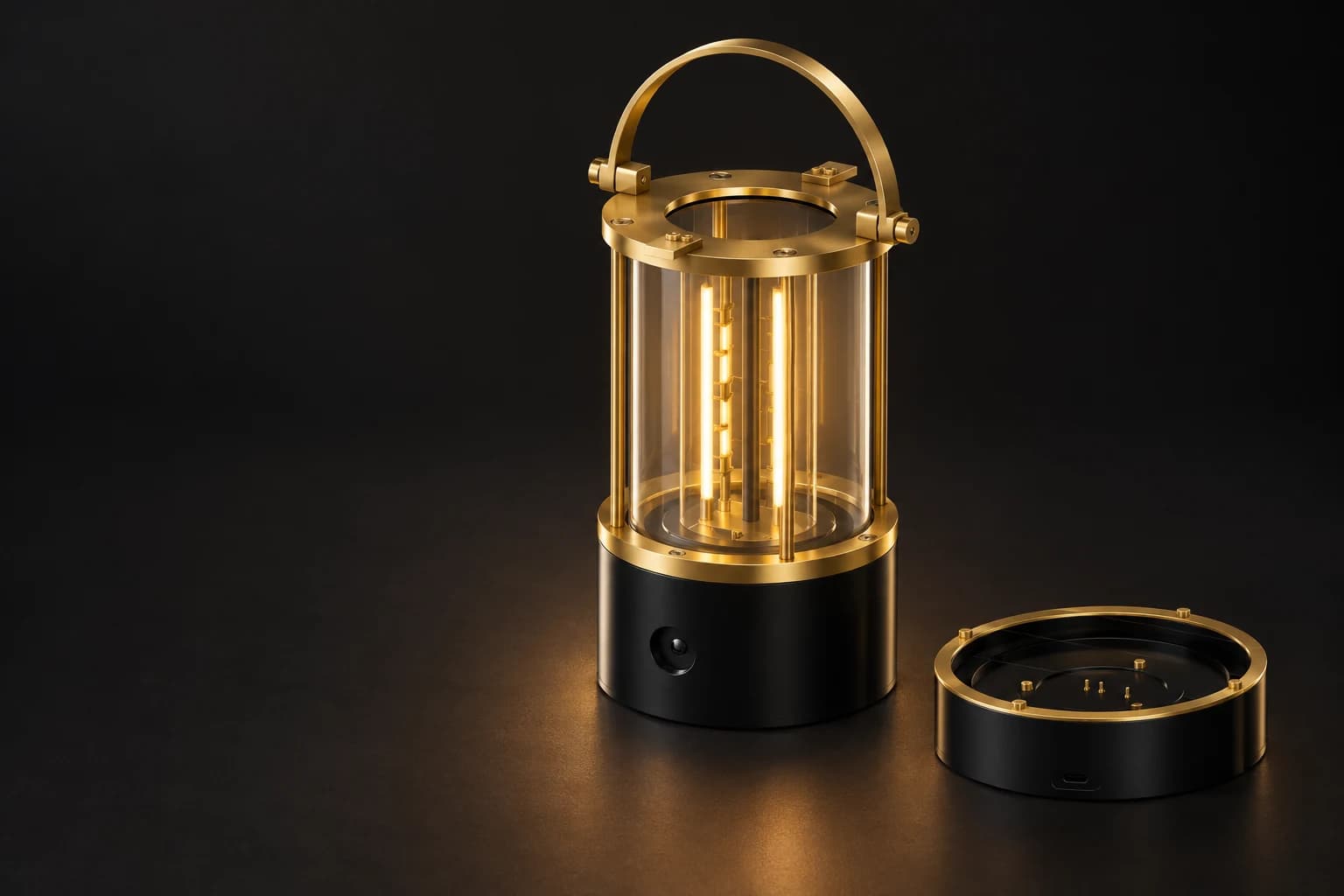
Escapement Lantern explores a familiar lantern silhouette through tangible materials: a four-post brass carrying cage, a glass globe, and a dark aluminum lower housing.
The design pairs that form with modern LED lighting and serviceable parts. A pivoting brass bail carries the handle loads through the metal cage, while a removable cartridge makes the light source accessible.
How it works.
Six rigid LED filaments sit in two columns of three behind a replaceable frosted acrylic diffuser. Each filament has an independently regulated branch.
A serviceable module with two 21700 cells targets approximately 10 Ah of battery capacity. A separate circular dock takes USB-C power and charges through spring contacts.
The design aims to keep the light on through ordinary docking and undocking. The master light switch leaves charging available. These behaviors still need to be checked on physical hardware.
Current state
Status / Pre-prototype
Pre-prototype.
Pre-prototype. CAD and circuit design are moving toward the first physical article. The next build will check glass fit, battery access, charging contacts, temperature, and actual lighting behavior. The project will be released on GitHub after that first article is built; there is no public repository or release date yet.
Build notes
From the work.
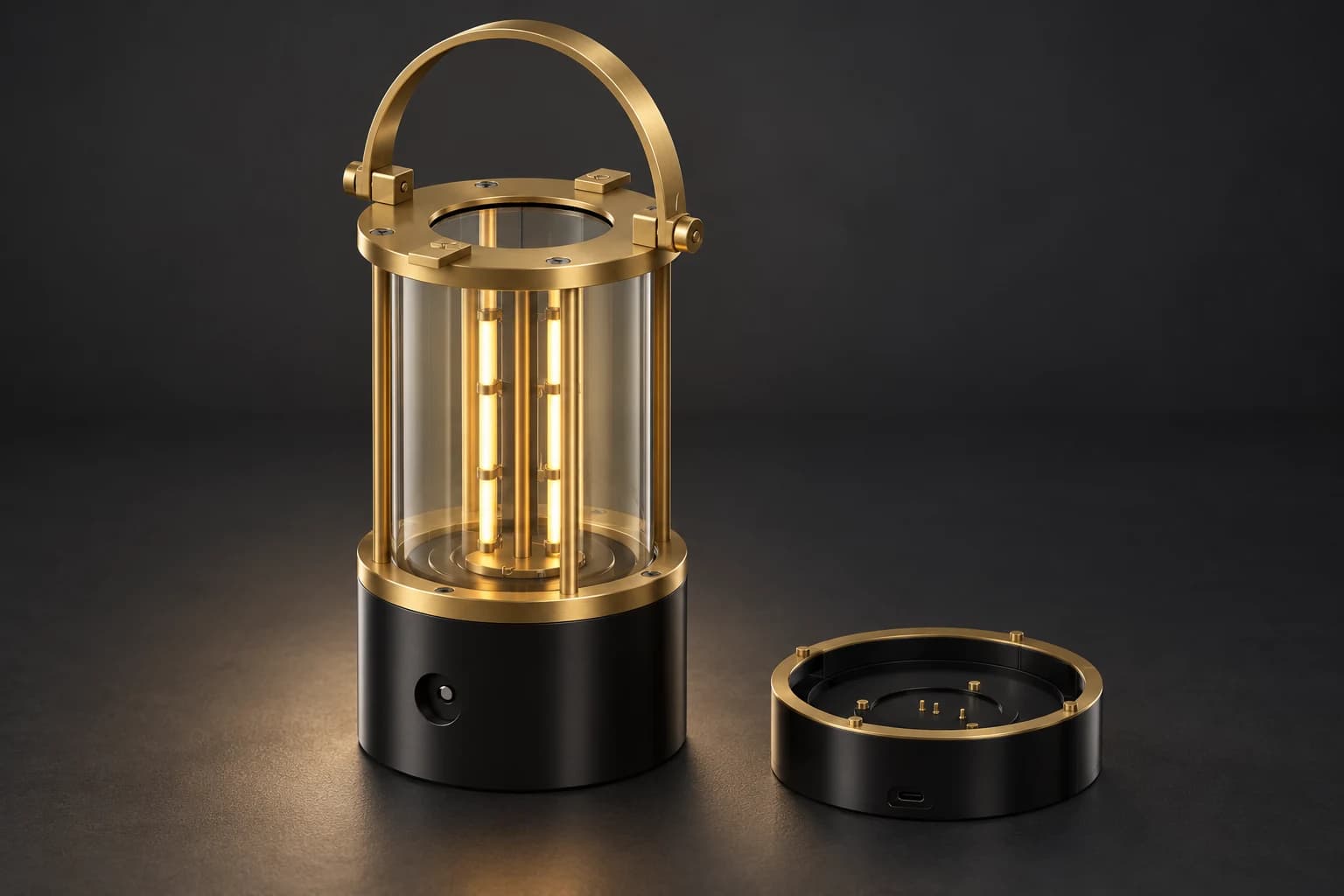
Concept renderings, before the first build
The renderings visualize the intended brass, glass, and black aluminum assembly. They are design concepts rather than photographs of a finished lantern. Glass and optics are simplified; final fit, finish, and appearance will follow the first physical build.
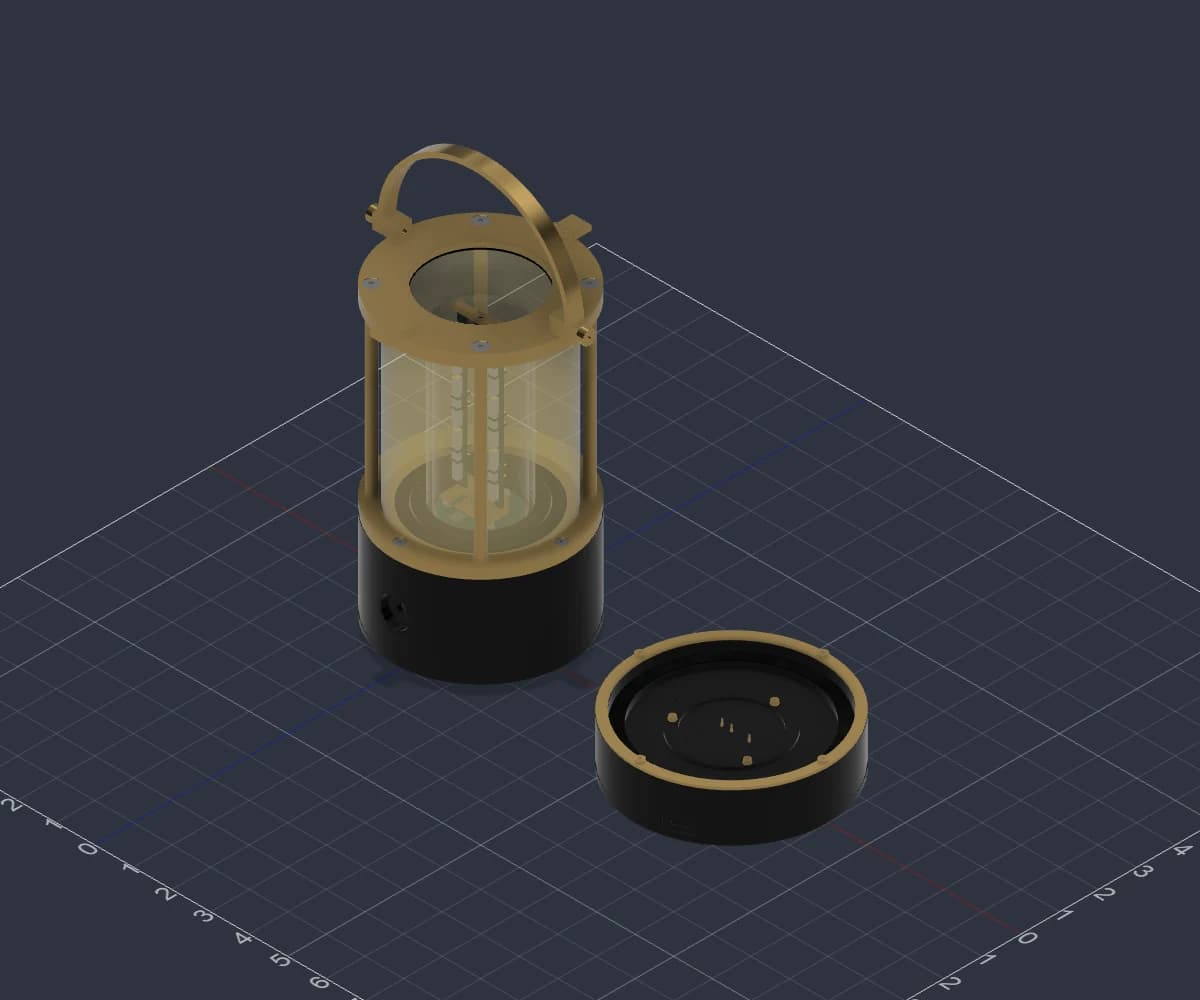
From model to metal
The CAD image is an earlier exterior study. Housing and internal battery packaging continue to evolve. The first article will test whether the modeled interfaces work together in real materials.
Measure the promises
Planning estimates are 40–60 hours of lighting and 6–7 hours for a lights-off recharge. Neither has been measured on physical hardware. Runtime, charging, contact heating, and docking continuity will be evaluated during the first build.
Built first, shared on GitHub
The project will be released on GitHub after the first physical article has been built. The build comes first so the release can reflect what was learned from making the lantern.